History & local legend
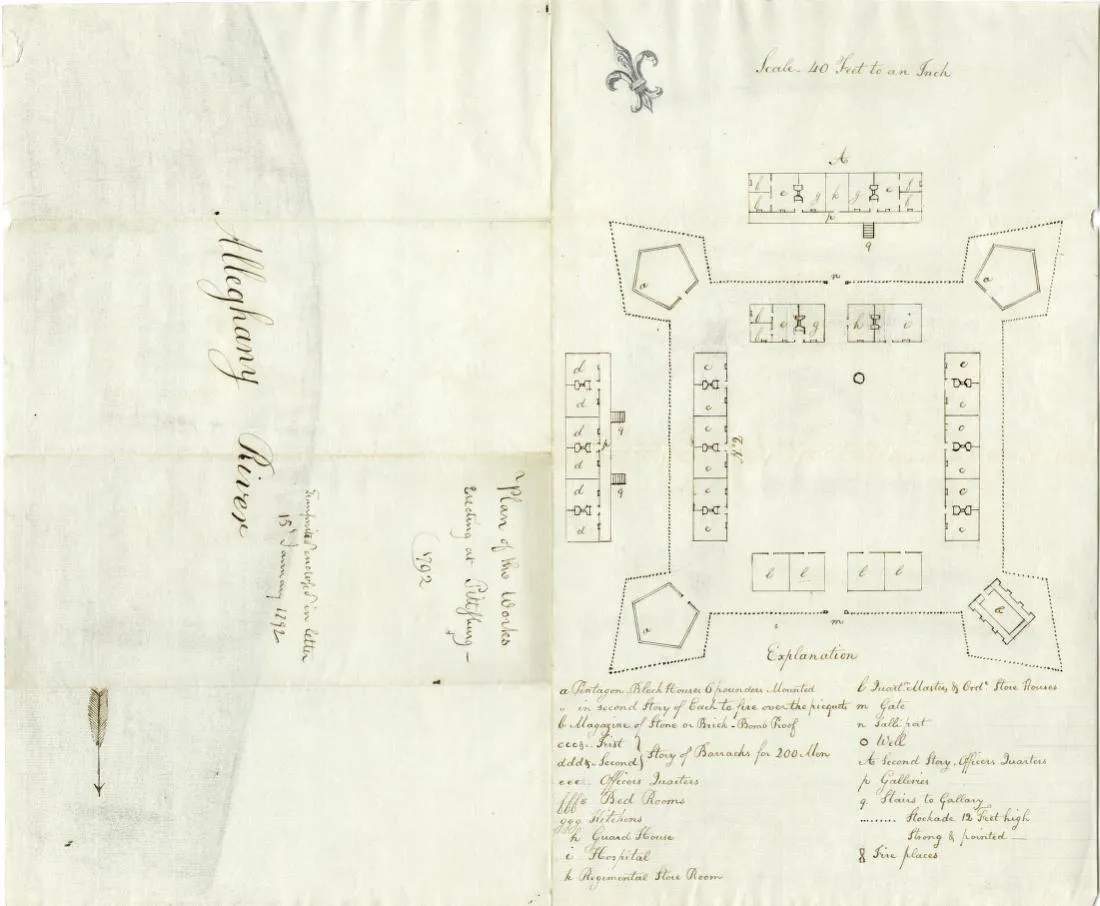
Fort Pitt Site lies within Point State Park in downtown Pittsburgh, at the forks of the Ohio River. The museum occupies the former fort’s Monongahela Bastion. Its after-hours ghost stories sit alongside two wider stories connected with the settlement: the frontier legend of boatman Mike Fink and the proposed state of Westsylvania.
The figures on the museum monitors
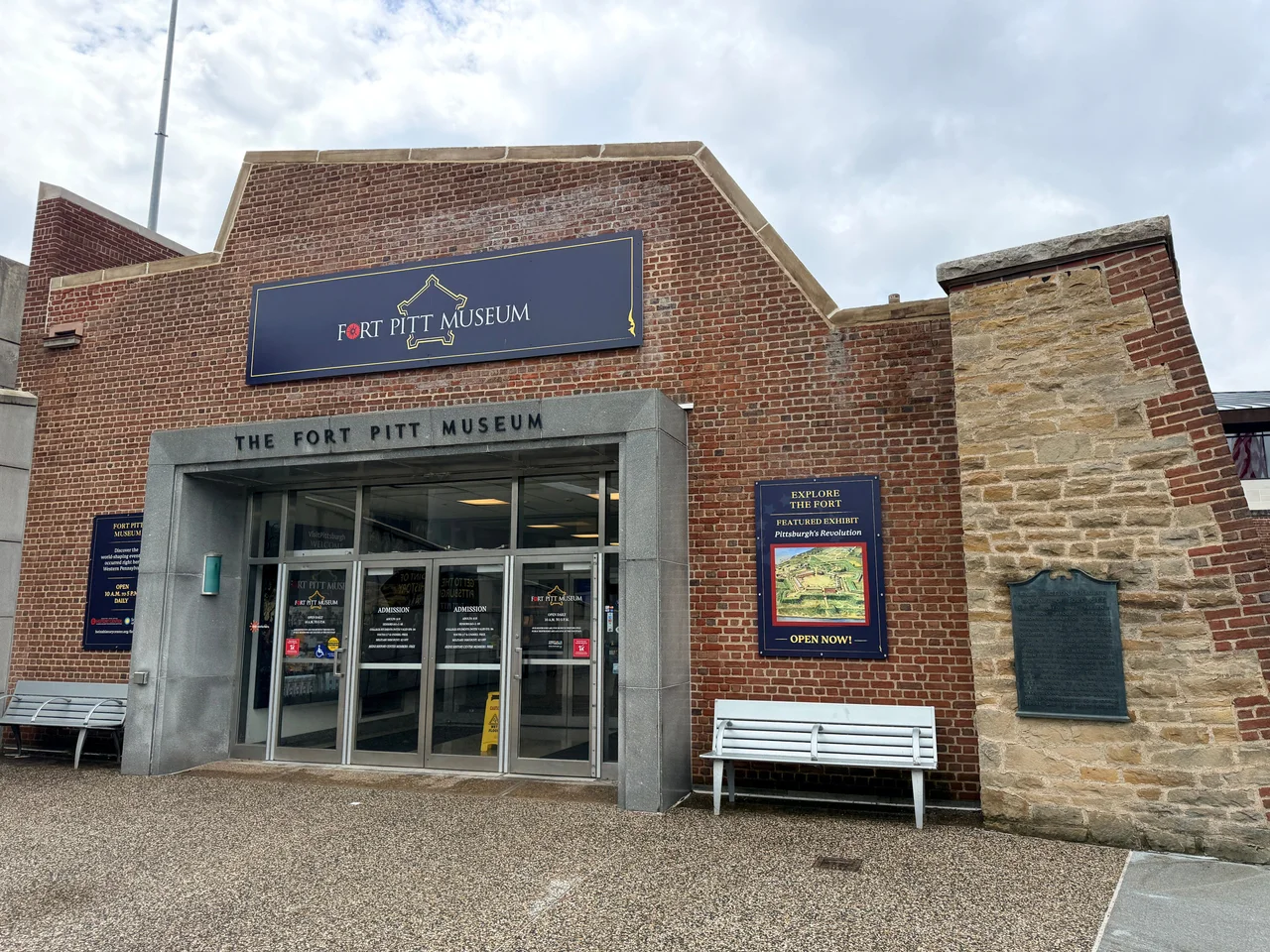
Fort Pitt Museum stands in Point State Park, on the footprint of the old fort’s Monongahela Bastion. Its displays recreate aspects of eighteenth-century life, including a trader’s cabin and figures in period clothing. Staff ghost stories concern figures that appear to move after visitors have left.
One account collected by KDKA describes a guard seeing someone on a security monitor after closing. When the room was checked, no one was there. Other reports describe apparent people moving through the museum buildings and disappearing before staff could reach them.
Unexplained sounds from empty sections of the museum form another part of its reputation.
Mike Fink, the Ohio River boatman
Mike Fink, the legendary Ohio River boatman associated with the early settlement around Fort Pitt, became famous in frontier storytelling for his strength, marksmanship and reckless wagers. One version of his death appeared in Davy Crockett’s almanac for 1838, placing his fatal shooting game farther downriver from Pittsburgh.
The boatmen’s contest involved a tin cup: one man held it at the stern while another fired from the bow, trying to shoot out its bottom. A missed shot cost the shooter a quart. Fink considered a cup held at arm’s length too easy a target, and his brother allowed him to balance one on his head.
In the almanac’s account, Fink eventually fires too soon and kills the man beneath the cup. A bystander with an old grievance then shoots Fink.
Westsylvania, the state that almost was
In 1776, settlers west of the Alleghenies petitioned the Continental Congress for a government called Westsylvania. The proposed commonwealth would have included Pittsburgh and substantial territory claimed by Pennsylvania and Virginia, with the ambition of becoming a fourteenth state.
The boundary dispute created practical problems. Competing claims could leave settlers uncertain which government controlled their land, while seeking help in either distant capital required crossing the mountains. A separate government promised a closer authority for the region.
Congress did not approve the proposal. Pennsylvania later strengthened its opposition, making efforts to form a new state within its borders an act of treason in 1782.
Sources
- CBS Pittsburgh/KDKA, Best Pittsburgh Haunts, Fort Pitt Museum section, reports of people on the monitors and sounds in empty areas
- HauntedHouses.com, Fort Pitt Museum, guards’ after-hours moving figures and sounds
- Pennsylvania DCNR, Point State Park sightseeing, museum located on original Monongahela Bastion
- Heinz History Center, Fort Pitt exhibits including a diorama and trader’s cabin
- OpenStreetMap, museum building footprint
- Davy Crockett’s Almanack for 1838, Mike Fink, the Ohio Boatman, p. 47, and engraved portrait on the following page, digitized original
- Morgan Neville, The Last of the Boatmen, contemporary newspaper reprint, March 11, 1829, Pittsburgh association
- University of Pittsburgh, doctoral study of river writing, Fink’s western Pennsylvania origins and the development of the boatman’s literary legendUnavailable ·
- University of Richmond, Atlas of the Historical Geography of the United States, 1776 petition and 1782 law
- The West Virginia Encyclopedia, Westsylvania
- Brian O’Neill, Pittsburgh Post-Gazette, Fort Pitt commissioner and Westsylvania petition
- Heinz History Center, Fort Pitt Museum at the forks